


Publish Date: 27 November 2025
Muscle strain is the stretching or tearing of muscle fibers. Learn its causes, symptoms, treatment, recovery tips, prevention, healing, and care.
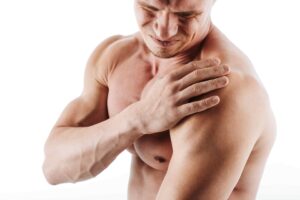
Muscle strain occurs when muscle fibers stretch excessively or tear due to sudden force, overuse, or improper biomechanics. This prevalent orthopedic injury impacts athletes, manual laborers, sedentary office workers, and even children during growth spurts. Muscle strain symptoms manifest as localized sharp pain, swelling, bruising, muscle spasms, and reduced functional capacity. Prompt muscle strain treatment with the RICE protocol—rest, ice, compression, elevation—minimizes secondary damage and accelerates healing. Muscle strain grades classify severity into three categories: Grade 1 (microscopic tears with minimal strength loss), Grade 2 (partial macroscopic tears with moderate impairment), and Grade 3 (complete rupture requiring surgical consideration). Distinguishing muscle strain vs tear is clinically vital—strains typically heal conservatively within weeks, whereas full-thickness tears often demand operative repair and 6–12 months rehabilitation. Dr. Ömer Bozduman, an orthopedic surgeon with over 15 years in sports traumatology, stresses that early pattern recognition, biomechanical correction, and structured rehabilitation prevent chronic pain syndromes and recurrent injury. With proper management, 75-95% of Grade 1–2 muscle strains achieve full pre-injury function without residual deficit.
What Is A Muscle Strain?
A muscle strain, commonly termed a pulled muscle, represents structural damage to muscle fibers or the musculotendinous junction caused by forces exceeding tissue tolerance. Unlike ligament sprains that destabilize joints, muscle strains compromise contractile units directly. The injury cascade begins with sarcomere overstretching, progresses to Z-line disruption, and in severe cases culminates in macroscopic fiber rupture and hematoma formation.
Muscle strain grades, established by the American Medical Society for Sports Medicine, provide prognostic and therapeutic guidance:
| Grade | Pathology | Clinical Findings | Expected Recovery |
| 1 | <5% fiber disruption | Pain with activity, no strength loss | 1–3 weeks |
| 2 | 5–50% partial tear | Pain, swelling, 10–50% weakness | 3–12 weeks |
| 3 | >50% or complete rupture | Severe pain, palpable defect, >50% dysfunction | 3–12 months |
Dr. Ömer Bozduman notes that ultrasound-guided evaluation reveals fiber discontinuity in as early as 6 hours post-injury, enabling precise grading and tailored intervention. Delayed diagnosis risks scar tissue formation and chronic weakness.
Muscle Tears Causes
Muscle tears arise from acute overload, chronic microtrauma, or combined mechanisms. Acute causes include:
Eccentric overload: Rapid lengthening under load (e.g., decelerating during a sprint). Hamstring strains occur when hip flexion and knee extension peak simultaneously.
Explosive concentric force: Jump takeoff or heavy deadlift initiation.
Direct trauma: Contusion from opponent contact compressing muscle against bone.
Chronic contributors encompass:
Repetitive microtrauma: Weightlifters develop quadriceps strains from thousands of squat repetitions.
Fatigue: Glycogen-depleted fibers lose shock-absorbing capacity; late-game injuries rise 300%.
Poor recovery: <48 hours between heavy sessions impairs satellite cell repair.
Biomechanical triggers include valgus stress (adductor strains), lumbar hyperlordosis (erector spinae overload), and scapular dyskinesis (trapezius tears). Dr. Ömer Bozduman’s research demonstrates that anterior pelvic tilt >15° increases lumbar strain risk by 40% during lifting.
Risk Factors Of Muscle Strains
Evidence-based risk stratification:
- Intrinsic Factors
- Age 25–35 peak incidence (high activity + declining elasticity)
- Male gender (higher testosterone-driven muscle mass but poorer flexibility)
- Previous strain (scar tissue tensile strength = 60–70% native)
- Genetic collagen variants (COL5A1 polymorphism)
- Extrinsic Factors
- Inadequate warm-up (<5 min dynamic)
- Training errors (volume >10% weekly increase)
- Surface hardness (concrete vs turf)
- Footwear traction mismatch
- Modifiable Behavioral Risks
- Sleep <6 h/night (↓ growth hormone 70%)
- Dehydration (>2% body weight loss)
- NSAID overuse (inhibits satellite cells)
Muscle Tears Symptoms
Muscle strain symptoms evolve predictably:
| Timeline | Grade 1 | Grade 2 | Grade 3 |
| Immediate | Tightness, cramp | “Pop” + stab | Audible snap, collapse |
| 0–6 h | Activity pain | Swelling onset | Hematoma spread |
| 6–48 h | Soreness | Peak edema, bruising | Palpable gap |
| 3–7 days | Resolving | Functional deficit | Muscle retraction |
Location-specific clues:
- Hamstring: Buttock pain radiating to knee, positive bowstring sign.
- Quadriceps: Anterior thigh swelling, inability to extend knee against gravity.
- Calf: Sudden posterior leg pain, limping.
Night pain or sleep disruption indicates moderate-severe injury requiring imaging.
What Does A Muscle Strain Feel Like
Patient descriptors vary by grade and phase:
- Grade 1: “Like I worked out too hard, but only on one side.” Dull ache during movement, relief at rest.
- Grade 2: “Felt a rubber band snap inside my leg.” Burning localized pain, weakness when pushing off, limping.
- Grade 3: “My muscle just gave out.” Sudden intense pain followed by numbness, then throbbing hematoma pressure.
Abdominal strains produce “tearing” during sit-ups or twisting.
What Does A Muscle Strain Look Like
Visual progression:
- 0–12 hours: Subtle swelling, muscle spasm contour.
- 12–48 hours: Circumference increase 1–4 cm, early ecchymosis.
- Day 3–7: Bruising migrates distally (Track sign)—calf tear bruises ankle, biceps tear bruises elbow.
- Grade 3: Muscle bunching (Popeye deformity), visible gap, skin tenting.
Ultrasound findings:
- Grade 1: Hypoechoic edema without fiber disruption.
- Grade 2: Partial fiber discontinuity + perimuscular fluid.
- Grade 3: Complete retraction with hematoma.
Types Of Muscle Strains
Back Muscle Strain
Anatomy: Erector spinae, multifidus, quadratus lumborum.
Mechanism: Forward bending + rotation under load (e.g., lifting child awkwardly).
Symptoms: Unilateral low back pain, morning stiffness, pain with sit-to-stand.
Red flags: Bilateral symptoms, bowel/bladder changes (cauda equina).
Rehab: McKenzie extension protocol, core bracing, hip hinge retraining.
Neck Muscle Strain
Anatomy: Upper trapezius, levator scapulae, sternocleidomastoid (SCM).
Mechanism: Whiplash, prolonged forward head posture (>2 h).
Symptoms: Occipital headache, shoulder referral, rotation <45°.
Associated: Cervicogenic dizziness, temporomandibular pain.
Treatment: Postural correction, scapular setting, neural glides.
Calf Muscle Strain
Anatomy: Medial gastrocnemius (tennis leg), soleus.
Mechanism: Push-off in sprint, jump landing.
Symptoms: Sudden posterior leg pain, limping, positive Thompson test (if Achilles intact).
Imaging: MRI distinguishes gastroc vs soleus vs plantaris.
Rehab: Heel raise progression, eccentric Nordic drops.
Abdominal Muscle Strain
Anatomy: Rectus abdominis, external/internal obliques.
Mechanism: Explosive twist (tennis serve), heavy crunch sets.
Symptoms: Lower quadrant pain, positive Carnett’s sign (pain ↑ with abdominal contraction).
Complications: Sports hernia mimic, rectus sheath hematoma.
Treatment: Avoid trunk flexion 2 weeks, progress to rotational isometrics.
Pectoralis Major Muscle Strain
Anatomy: Pectoralis major (sternal & clavicular heads).
Mechanism: Bench press overload, fall on outstretched arm.
Symptoms: Anterior chest pain, weakness in horizontal adduction, bruising over deltoid.
Differential: Biceps tendon rupture, shoulder dislocation.
Management: Repair within 3 weeks if >50% tear; conservative for partial.
Hamstring Muscle Strain
Hamstring muscle strain (posterior thigh muscle injury), is one of the most common muscle injuries in sports medicine and accounts for 20–25% of all muscle strain cases. The hamstring group consists of biceps femoris, semitendinosus, and semimembranosus muscles; these muscles play a critical role in hip extension and knee flexion. Eccentric contraction (force production while the muscle lengthens) under excessive load, especially in high-speed sports such as sprinting, soccer, basketball, track and field, and dance, increases the risk of hamstring strain.
Mechanism and Pathophysiology
Hamstring injury typically occurs through a two-phase mechanism:
- Late swing phase – When the knee is in extension and the hip in flexion, the hamstrings are at maximum length while the extensor muscles (quadriceps) dominate.
- Push-off phase – Sudden concentric load at heel strike.
The long head of biceps femoris is most commonly torn at the musculotendinous junction; proximal tendon (ischial tuberosity) avulsions are seen in young athletes.
Risk Factors
- Previous hamstring strain (recurrence risk 30–50%)
- Age >25 (collagen elasticity decreases)
- Eccentric strength deficit (Nordic hamstring curl <20 reps)
- Quadriceps/hamstring ratio >1.2
- Inadequate warm-up (<5 min dynamic stretch)
- Fatigue (risk 4x higher in the last 15 minutes of a match)
- Poor surface (hard turf, slippery court)
Hamstring Strain Symptoms
| Grade | Symptom | Functional Loss |
| 1 | Mild tightness, “pulling” sensation while running | 0–5% |
| 2 | Sudden “snap” sound, sharp pain, limping | 10–50% |
| 3 | Complete tear, collapse at the hip, palpable defect | >50%, inability to walk |
Proximal hamstring tendon avulsion presents with bruising (track sign) behind the hip and pain when sitting.
Diagnosis
- Clinical tests
- Puranen-Orava test: Prone position, active knee extension at 90° flexion → pain
- Active knee extension test: Supine, hip at 90° flexion, active knee extension angle <20°
- Palpation: Tenderness at ischial tuberosity
- Imaging
- Ultrasound: 92% sensitivity within 24 hours; hematoma and fiber continuity
- MRI: T2 hyperintensity showing musculotendinous junction tear percentage (25%, 50%, 100%)
- British Athletics Muscle Injury Classification (BAMIC):
- a: Myofascial
- b: Musculotendinous
- c: Intratendinous
- Number: 0–4 (location and length)
Hamstring Strain Treatment
| Phase | Duration | Goal | Application |
| Acute (0–72 h) | 3 days | ↓ Edema, bleeding control | RICE, crutches (Grade 2–3), NSAID 3 days |
| Subacute (3–14 days) | 11 days | Mobility | Isometric (submax 30–50%), hydrotherapy, TENS |
| Remodeling (2–8 weeks) | 6 weeks | Strength | Eccentric Nordic curl, deadlift variations, BFR |
| Functional (6–16 weeks) | 10 weeks | Return to sport | Sprint mechanics analysis, plyometrics, agility ladder |
Surgical indications:
- Complete avulsion (>2 cm retraction) → suture anchor within 7–10 days
- Chronic symptomatic tendinopathy → tenotomy + PRP
Recovery Time
- Grade 1: 1–3 weeks
- Grade 2: 4–8 weeks (average 6 weeks)
- Grade 3 (conservative): 3–6 months
- Grade 3 (surgical): 6–12 months
Acceleration Methods
PRP (Platelet-Rich Plasma): Shortens return time by 20% in Grade 2
- Eccentric loading protocol: 3x/week Nordic curl (6 weeks → 85% strength symmetry)
- Moist heat + cold contrast: ↑ Blood flow 15%
- Sleep 8 hours → GH peak ↑70%
Prevention
- Nordic Hamstring Program – 10 weeks, 3 sets, 2x/week → 51% risk reduction
- FIFA 11+ – Warm-up protocol → 35% overall injury ↓
- Askling L-Protocol: Eccentric + sprint-specific
- GPS load monitoring: Acute:Chronic >1.5 → red flag
Return-to-Sport Criteria
- Pain-free full ROM
- Isokinetic test: 60°/s → 90% peak torque symmetry
- Functional tests:
- Single-leg hop >90%
- Illinois agility test <5% difference
- Repeated sprint ability (RSA) <3% drop
- Psychological readiness: Tampa Kinesiophobia <19
How Is A Muscle Strain Diagnosed?
Step-wise approach:
- History
- Mechanism (acute vs insidious)
- Timing of “pop” sensation
- Ability to continue activity
- Prior episodes
- Physical Exam
- Inspection: Swelling, bruising, deformity
- Palpation: Point tenderness, defect
- ROM: Active vs passive
- Strength: Resisted isometric testing
- Special tests: • Hamstring: Puranen-Orava test • Adductor: Squeeze test • Calf: Thompson test
- Imaging
- Ultrasound: Dynamic, cost-effective; sensitivity 92% for Grade 2–3.
- MRI: Gold standard for surgical planning; T2 hyperintensity quantifies edema.
- X-ray: Avulsion in adolescents (iliac crest, ischial tuberosity).
What’s The Best Treatment For A Pulled Muscle?
Evidence-based algorithm:
| Phase | Goals | Interventions |
| Protection (0–72 h) | Pain control, edema ↓ | RICE, optional sling/crutches, NSAID 3–5 days |
| Optimal Loading (Day 3–14) | Prevent stiffness | Isometrics 30–50% MVC, gentle AAROM |
| Remodeling (Week 2–8) | Restore strength | Concentric → eccentric, closed-chain |
| Functional (Week 6+) | Sport specificity | Plyometrics, agility, return-to-play testing |
Medication nuances:
- Topical diclofenac = oral ibuprofen efficacy, fewer GI effects.
- Short-course oral steroids only for severe edema (e.g., lumbar strain with nerve compression).
What Is The Treatment For A Muscle Strain?
Detailed phased protocol:
- Acute Phase (0–3 days)
- Rest: Relative—avoid painful arcs.
- Ice: 15 min every 2 h, crushed ice in moist towel.
- Compression: 20–30 mmHg elastic wrap, reassess circulation.
- Elevation: Limb above heart when possible.
- Pharmacology: Acetaminophen preferred; NSAID if swelling dominant.
- Subacute Phase (4–14 days)Mobility: Pain-free AAROM, hydrotherapy.
- Manual therapy: Effleurage, light cross-friction.
- Modalities: NMES for muscle re-education, TENS for pain gating.
- Rehabilitation Phase (2–12 weeks)
- Strength: 3–5 sets, 8–15 reps, 48 h rest between sessions.
- Flexibility: PNF contract-relax, hold 30 s.
- Balance: Single-leg stance → unstable surface.
- Return-to-Play
- Y-Balance test symmetry
- Sport-specific battery (e.g., Illinois agility for soccer)
How To Speed Up Muscle Strain Recovery
Accelerated recovery toolkit:
| Intervention | Mechanism | Evidence |
| Protein 1.6–2.2 g/kg | ↑ MPS via mTOR | Meta-analysis: +25% strength gain |
| Sleep 7–9 h | GH pulse | ↓ healing time 30% |
| Compression garments | ↓ edema, ↑ venous return | Reduces DOMS 24% |
| BFR training | Hypoxia → anabolic signaling | 20% 1RM with 30% load |
| Contrast therapy | Vasodilation/vasoconstriction | ↑ blood flow 15% |
| Creatine 5 g/day | ATP regeneration | Faster Grade 2 recovery |
| Vitamin D 4000 IU | Muscle repair gene expression | If serum <30 ng/mL |
Avoid:
- Heat in first 72 h (↑ bleeding)
- Alcohol (↓ protein synthesis 20%)
- Smoking (delays healing 40%)
How Long Does A Pulled Muscle Take To Heal?
Healing timelines with 95% CI:
| Grade | Structural | Full Sport |
| 1 | 7–21 days | 10–28 days |
| 2 | 3–8 weeks | 6–12 weeks |
| 3 | 3–6 months | 6–18 months |
Influencers:
- Vascularity: Gastrocnemius > biceps (richer blood supply).
- Age: Pediatric 30–50% faster.
- Recurrent: Adds 4–6 weeks.
- Compliance: Full adherence shortens 25%.
Serial ultrasound at 2-week intervals confirms fiber alignment; persistent hypoechoic areas >20% warrant extended protection.
What Can I Do To Prevent Muscle Strains?
Multifactorial prevention:
- Warm-up
- 5 min cardio + dynamic stretches
- FIFA 11+ reduces injuries 35%
- Strength
- Eccentric focus (Nordic curls ↓ hamstring strain 51%)
- Core:anti-rotation (Pallof press)
- Flexibility
- Daily foam rolling + static stretch post-workout
- Load Management
- Acute:chronic workload ratio 0.8–1.3
- GPS tracking in elite sport
- Equipment
- Shoe rotation every 400 km
- Orthotics if rearfoot valgus >8°
When Should I See A Healthcare Provider For A Muscle Strain?
Urgent referral:
- Functional incapacity >48 h
- Neurological deficits
- Suspected compartment syndrome (pain ↑ with stretch, paresthesia)
- Fever, erythema (infection)
- Pediatric avulsion (growth plate)
Routine follow-up: No improvement after 7–10 days RICE.
When Can I Return To Sports After Muscle Strain?
Criteria-based RTP:
- Pain: 0/10 all activities
- ROM: Full symmetric
- Strength: ≥90% isokinetic
- Function: Hop test, agility T-test
- Psychology: TAMPA kinesiophobia <35
Bracing: Functional tape first 2 weeks reduces re-injury 60%.
Monitoring: Wearable sensors track workload 4 weeks post-RTP.

Assoc. Prof. Dr. Ömer Bozduman completed his medical degree in 2008 and subsequently served in various emergency medical units before finishing his Orthopedics and Traumatology residency in 2016. After working at Afyonkarahisar State Hospital, Tokat Gaziosmanpaşa University, and Samsun University, he continued his career at Memorial Antalya Hospital. He now provides medical services at his private clinic in Samsun, specializing in spine surgery, arthroplasty, arthroscopy, and orthopedic trauma.